
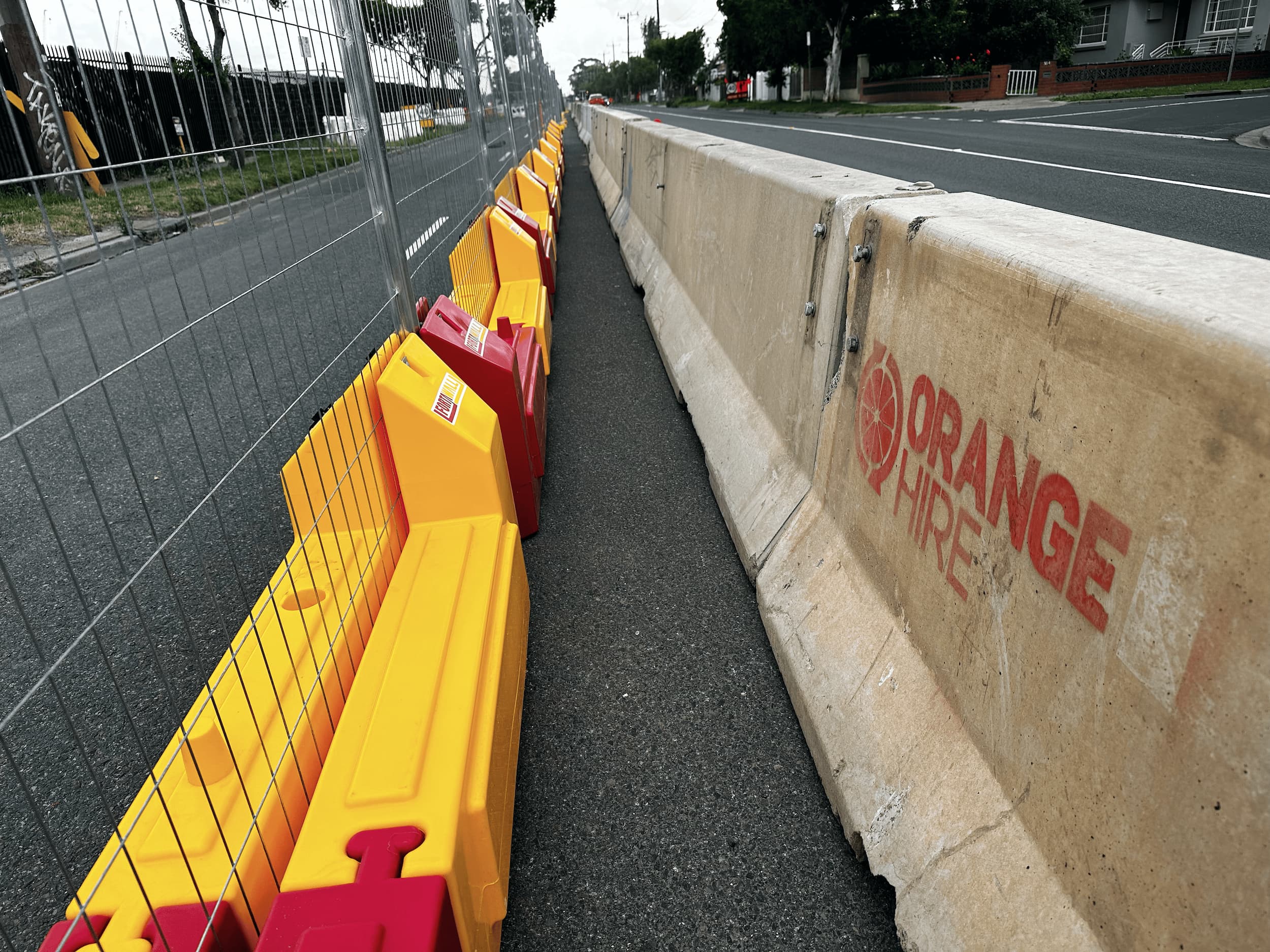
Roadworks present significant hazards to both workers and the public, requiring effective physical barriers to prevent accidents and maintain safety compliance. Temporary fencing provides crucial protection for the public during roadworks by acting as a strong physical barrier that keeps people away from hazards such as excavation sites, heavy machinery, and uneven ground. It also prevents unauthorised access, reducing the risk of accidental entry into dangerous areas and helping to keep children safe. Beyond safety, fencing assists with managing pedestrian and vehicle movement by guiding traffic along designated routes, ensuring people remain on safe pathways and avoid confusion or injury.
Australian roadwork projects operate under strict safety regulations that demand compliant temporary fencing systems meeting specific standards for height, stability, and structural performance. These legal requirements exist because temporary fencing acts as a barrier to keep areas secure and is required by law to confine safety hazards during construction activities. The right fencing solution can mean the difference between a compliant, secure worksite and one that faces regulatory penalties or safety incidents.
Key Safety Functions of Temporary Fencing in Roadworks
Temporary fencing serves three critical safety functions during roadworks operations. It creates physical barriers to prevent unauthorised entry into dangerous work zones, establishes protective boundaries for pedestrians and motorists, and significantly reduces the likelihood of accidents and injuries through proper site delineation.
Preventing Unauthorised Access Near Roadworks
Physical Barriers Against Intrusion: Temporary fencing creates an immediate visual and physical deterrent to unauthorised personnel entering active work zones. Construction sites require secure fencing around active worksites to prevent public access under Australian workplace health and safety laws.
Compliance with Legal Requirements: Temporary fencing is mandatory for construction and civil projects in all Australian states. This legal obligation ensures consistent safety standards across roadworks projects.
Protection of Equipment and Materials: Fencing prevents theft and vandalism of expensive machinery and construction materials left on-site overnight. It also stops curious members of the public from interfering with equipment that could cause injuries or project delays.
Wind Resistance Standards: Quality temporary fencing systems must withstand significant wind loads without creating additional hazards. Properly engineered barriers remain stable in adverse weather conditions, maintaining site security when workers are absent.
Protecting Pedestrians and Road Users
Clear Boundary Definition: Temporary fencing establishes obvious boundaries between safe pedestrian areas and active construction zones. This visual separation helps pedestrians navigate around work sites without accidentally entering dangerous areas.
High-Visibility Requirements: Australian regulations mandate high-visibility barriers near roads, footpaths, and pedestrian areas. Bright colours and reflective materials ensure barriers remain visible during day and night operations.
Traffic Flow Management: Strategic fence placement channels vehicle traffic away from work zones whilst maintaining reasonable access to surrounding areas. This controlled flow reduces congestion and prevents vehicles from entering restricted zones.
Elimination of Trip Hazards: Traditional temporary fencing often creates trip hazards through ground-level supports and guy wires. Modern heavy-duty systems eliminate these dangers through improved base designs that sit flush with ground surfaces.
Reducing Accident and Injury Risks
Debris Containment: Temporary fencing contains dust, small debris, and construction materials within work zones. This containment prevents materials from reaching pedestrian walkways or vehicle travel lanes where they could cause accidents.
Emergency Response Access: Properly installed fencing includes designated access points for emergency vehicles whilst maintaining overall site security. These planned openings ensure rapid response times without compromising worker or public safety.
Structural Integrity Standards: Compliant temporary fencing meets Australian Standards AS1170.2 for wind actions and AS4687.2:2022 for temporary fencing applications. These standards ensure barriers maintain structural integrity under normal operating conditions without creating additional safety risks.
Legal Requirements and Australian Standards for Temporary Fencing
Australian law mandates temporary fencing compliance across all construction and civil projects in every state and territory. The AS 4687:2:2022 standard establishes minimum safety benchmarks whilst WHS regulations enforce workplace protection obligations.
AS 4687:2:2022 Compliance
The AS 4687:2:2022 standard serves as the foundational document for all temporary fencing installations across Australia. This standard replaced earlier versions and introduced stricter requirements for construction sites and roadworks applications.
Key compliance requirements include:
- Minimum fence height of 1.8 metres for construction applications
- Wind resistance up to 0.75 kPa (approximately 120 km/h wind speeds)
- Continuous barrier formation with no gaps for unauthorised access
- Materials meeting specific durability standards with 1.6mm minimum wall thickness
The standard requires comprehensive testing procedures including wind load resistance, impact testing, and structural load capacity verification. All temporary fencing components must be permanently marked with manufacturer identification and AS 4687:2:2022 reference.
Documentation requirements mandate technical specifications, valid test reports from accredited laboratories, and certification of conformity. Installation instructions and maintenance guidance must accompany all compliant systems.
Work Health and Safety (WHS) Regulations
WHS legislation across Australian states and territories establishes mandatory temporary fencing requirements for active worksites. These regulations work alongside AS 4687:2:2022 to ensure comprehensive protection during roadworks and construction activities.
Primary WHS obligations include:
| Requirement | Application |
| Secure perimeter fencing | All active construction sites |
| High-visibility barriers | Near roads and pedestrian areas |
| Wind-resistant installations | Sites prone to high winds |
| Public access prevention | Unauthorised civilian protection |
Construction sites must implement professionally installed fencing plans as prerequisites for council permits and public liability insurance coverage. Regular inspections ensure ongoing compliance with daily visual checks and weekly stability assessments.
WHS regulations specifically target protection for workers without proper PPE and prevention of public access to dangerous areas. These requirements apply consistently across residential, commercial, and infrastructure projects.
Penalties for Non-Compliance
Non-compliance with temporary fencing standards results in significant financial and legal consequences for construction companies and contractors. Penalties vary between states but consistently include substantial fines and potential project suspension orders.
Common enforcement actions include:
- Immediate work stoppage notices for non-compliant installations
- Financial penalties ranging from thousands to tens of thousands of dollars
- Public liability exposure for accidents involving inadequate fencing
- Insurance policies voided for non-compliant safety measures
Professional installation and AS 4687:2:2022 compliance reduce legal liability risks whilst demonstrating due diligence in safety management. Construction companies face additional scrutiny from WorkSafe authorities following incidents involving temporary fencing failures.
Beyond immediate penalties, non-compliance can result in project delays, increased insurance premiums, and reputation damage within the construction industry. Regulatory authorities maintain detailed records of safety violations that influence future permit applications and contractor assessments.
Temporary Fencing Solutions for Diverse Roadwork Environments
Modern roadwork projects require adaptable fencing systems that can handle varying wind conditions, site layouts, and integration with traffic management systems. Advanced temporary barriers must provide consistent protection across different environments while maintaining compliance with Australian safety standards.
How Fortawall Adapts to Varying Site Needs
Roadwork environments present unique challenges that standard temporary fencing often cannot address effectively. Wind resistance becomes critical on exposed highways and elevated sections where gusts can exceed 100km/h.
Fortawall’s 165km/h wind rating ensures barriers remain stable in extreme weather conditions. This specification exceeds requirements for most Australian roadwork sites, including coastal highways and mountain passes.
The system’s modular design allows rapid configuration changes as work zones shift. Panels interlock securely without requiring ground penetration, making installation possible on concrete surfaces and bridges.
Trip hazard elimination addresses a major safety concern on active roadways. Traditional chain-link fencing creates dangerous base obstacles for workers and emergency responders moving through work zones.
Site managers can configure Fortawall around complex road geometries including:
- Curved highway sections
- Intersection modifications
- Bridge maintenance areas
- Multi-level construction zones
The narrow base profile allows placement closer to traffic lanes without compromising pedestrian access. This design maximises available work space while maintaining required safety clearances.
Integration with Traffic and Pedestrian Management
Temporary fencing systems must coordinate with broader traffic control measures to create comprehensive safety zones. Effective integration requires barriers that complement rather than conflict with existing traffic management infrastructure.
Visual clarity becomes essential when fencing runs parallel to active traffic lanes. Fortawall’s panel construction provides clear delineation between work zones and traffic without creating visual barriers for drivers approaching intersections.
Pedestrian walkways require specific consideration during roadwork projects. The system’s ability to create protected corridors allows safe passage whilst maintaining work zone security.
Key integration benefits include:
| Traffic Element | Fortawall Integration |
| Variable message signs | Stable mounting platform without ground anchors |
| Temporary traffic lights | Clear sight lines with removable panels |
| Pedestrian diversions | Protected walkway creation |
| Emergency vehicle access | Rapid panel removal and replacement |
Compliance with AS4687.2:2022 ensures integration meets current Australian temporary fencing standards. This certification covers structural requirements and safety performance criteria specific to roadwork applications.
The system’s quick deployment capability supports dynamic traffic management needs. Panels can be repositioned during off-peak hours to accommodate changing traffic patterns without compromising worker safety.
The Role of Temporary Fencing in Protecting Workers and Public Assets
Temporary fencing serves as a critical barrier system that prevents unauthorised access to expensive equipment while simultaneously reducing legal exposure for roadwork contractors. Modern fencing solutions eliminate trip hazards and withstand severe weather conditions that could otherwise compromise site security.
Safeguarding Roadworks Machinery and Materials
Roadwork sites contain millions of dollars worth of machinery, materials, and infrastructure that require continuous protection from theft and vandalism. Heavy equipment such as excavators, compactors, and paving machines become prime targets when left exposed overnight or during weekends.
Professional-grade temporary fencing creates a physical deterrent that significantly reduces theft incidents. The 2-metre height requirement under Australian Standards makes climbing attempts difficult and highly visible to passing security patrols.
Material stockpiles including asphalt, concrete barriers, and signage also face constant threats from opportunistic theft. Copper cables and electronic traffic management equipment represent particularly high-value targets for criminals.
Robust fencing systems like Fortawall that comply with AS4687.2:2022 standards provide superior wind resistance up to 165km/h. This prevents fence collapse during storms that could otherwise leave sites completely exposed to security breaches.
The modular design allows contractors to adjust perimeter boundaries as work progresses. This flexibility ensures valuable assets remain protected throughout different phases of roadwork projects without requiring complete fence reinstallation.
Minimising Liability for Roadwork Sites
Roadwork contractors face substantial legal exposure when members of the public gain unauthorised access to active work zones. Proper fencing demonstrates reasonable steps have been taken to ensure public safety, which proves vital for insurance coverage and legal protection.
Trip hazards from standard temporary fencing create additional liability risks for both workers and pedestrians. Traditional fence bases protrude above ground level, causing frequent accidents that result in compensation claims and project delays.
Modern fencing solutions eliminate these hazards through flush-mounted base systems. Workers can move freely around equipment without navigating dangerous obstacles that increase accident rates on construction sites.
Insurance requirements often mandate compliant fencing as a condition of coverage. Policies may become void if incidents occur due to inadequate perimeter security or non-compliant barrier systems.
Regular fence inspections ensure ongoing compliance with Work Health and Safety legislation. SafeWork authorities conduct active site inspections and issue substantial fines for non-compliant installations that fail to meet minimum safety standards.
Looking for Roadworks Temporary Fencing? Contact Fortawall Today
Roadwork projects demand reliable temporary fencing that prioritises public safety and meets Australian compliance standards. Fortawall’s heavy duty temporary fencing system delivers the security and stability essential for roadwork sites across Australia.
Key benefits for roadworks include:
- Wind resistance up to 165km/h
- Trip-free design for pedestrian safety
- Quick installation with fewer components
- Australian Standards compliance
- Durable construction for extended use
Contact Fortawall today to discuss your roadwork temporary fencing requirements. The Australian-manufactured system provides the safety, security, and compliance standards essential for successful roadwork projects.